Anna Wintour presides over the Met Gala. But the person who conceives it, designs it, and brings it to life each year is a man whose name is never mentioned. Reading *The Met Gala* by Andrew Bolton means understanding that the true creative authority in contemporary luxury is not the one who is photographed.
Imagine the scene. Monday evening, May 4, 2026, 8 p.m. On the fifth floor of the Metropolitan Museum of Art, in an almost silent office, a man is filing notes into a folder marked “Superfine 2025, Review.” He is wearing a charcoal gray suit, a white shirt, and a narrow tie. No jewelry. No logos. His day is almost over. In two hours, he will go home.
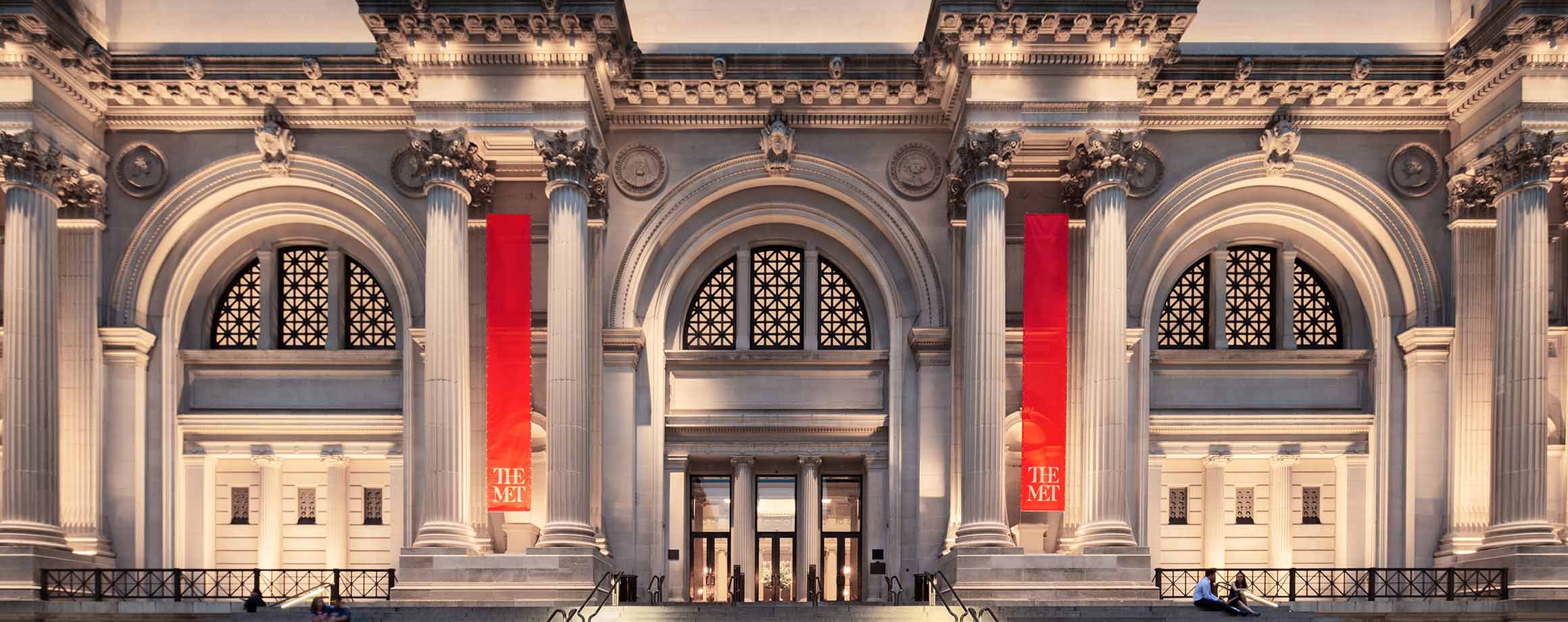
On the museum steps, fifty yards from his office, two thousand guests are arriving. They will walk through an exhibition he conceived, in a layout he designed, centered on a theme he devised. None of them will know how to pronounce his name.
This man’s name is Andrew Bolton. And for the past twenty years, he has been the one behind the Met Gala.
Anna Wintour approves. Andrew Bolton creates. The fashion industry has long refused to acknowledge this distinction. Yet it is fundamental. It means that the most photographed event on the global luxury calendar relies on a duo of which only one member is known. And that the true creative authority in contemporary luxury is not Wintour. It is Bolton.
The man who isn’t photographed
Andrew Bolton was born in Lancaster, England, in 1966. He grew up in a modest family, the son of a miner and a homemaker. He studied anthropology at the University of East Anglia, then art history at the Courtauld Institute in London. His academic background is not that of a fashion editor. It was that of an academic.
He joined the Victoria and Albert Museum in London in 1995 as an assistant curator in the fashion department. He remained there for seven years. In 2002, he was recruited by the Metropolitan Museum of Art in New York, to the Costume Institute, under the direction of Harold Koda. When Koda retired in 2015, Bolton succeeded him. Since then, he has headed the museum’s most-visited department.
Under his leadership, the Costume Institute has organized some of the most memorable exhibitions in the history of fashion. Alexander McQueen: Savage Beauty in 2011, shortly after the designer’s suicide, set a record attendance with 660,000 visitors. China Through the Looking Glass in 2015, Manus x Machina in 2016, Heavenly Bodies in 2018, “Camp Notes on Fashion” in 2019, “About Time” in 2020, “In America” in 2021 and 2022, “Karl Lagerfeld: A Line of Beauty” in 2023, “Sleeping Beauties: Reawakening Fashion” in 2024, and “ : Superfine Tailoring, Black Style” in 2025. Each exhibition has become a benchmark in museum curation.
Yet Bolton hardly ever appears in the fashion press. He gives almost no interviews. He doesn’t pose with the celebrities attending the Met Gala. He has lived with his partner since 2010, the designer Thom Browne, in a life of chosen discretion. He has turned down all autobiographies, all Vanity Fair profiles, and all magazine covers that might have been offered to him.
This discretion is no accident. It is integral to his role. A curator is not supposed to be visible. He is supposed to orchestrate the visibility of others.
The most enduring power is the one that goes unrecognized.
The Intellectual Architecture of the Gala
To understand what Bolton does, one must understand what a Costume Institute exhibition is.
An exhibition is not a simple display of dresses. It is a visual argument. Bolton begins each cycle with a conceptual question. What does the camp say about the codes of masculinity? How does fashion negotiate its relationship to time? What remains of the couture heritage when confronted with artificial intelligence? How does black tailoring reframe the history of elegance?
Each project involves an eighteen-month to two-year research cycle. Bolton reads extensively. He consults historians, theorists, and anthropologists. He visits the workshops of the relevant fashion houses. He studies the archives. Once the theme is finalized, he outlines it in a twenty- to fifty-page programmatic text, which serves as a reference for the entire scenography team.
Then comes the staging. Bolton works with museum architects—often Shohei Shigematsu of OMA—lighting designers, sound designers, and textile conservators. Each room is conceived as a page. Each visitor path is calibrated like a text. Every exhibited piece is sourced, dated, and recontextualized.
The Met Gala itself is a result of this method. It is the official opening of the exhibition that Bolton has designed. The evening’s scenography, the menu, the selection of co-chairs, the elements of the dress code: everything is aligned with the year’s intellectual theme. Without this backbone, the Gala would be an ordinary charity dinner. With it, it becomes the annual gathering of an industry that comes to acknowledge a museum-style interpretation of its own work.
Wintour doesn’t do that. Wintour endorses Bolton’s choices. She enlists the fashion houses to provide the pieces. She compiles the guest list. She presides over the evening. But she isn’t the one who came up with the theme.
This difference is not minor. It is everything.
Wintour validates. Bolton invents. The industry has long confused the two.
The Invisible Duo
The Bolton-Wintour partnership is one of the most powerful duos in contemporary fashion. And yet, few articles have truly described it. Wintour and Bolton met in 2002, when Bolton arrived at the Costume Institute. At that time, Wintour had already been chairing the Costume Institute Benefit for seven years. She immediately recognized Bolton as an intellectual partner. She handles the social aspect; he handles the intellectual aspect. She opens the doors to the fashion houses; he creates the content that makes those doors openable. The duo, though unnamed, has shaped the Met Gala for twenty-three years.
Wintour handles the financial side. The Costume Institute Benefit raises between twenty-five and fifty million dollars each year. Without Wintour’s network of contacts, without her authority to secure the fashion houses’ endorsement, these sums would be impossible to raise. Vogue covers a significant portion of the production costs. Condé Nast provides its teams. Wintour is the Gala’s economic driving force.
Bolton handles the cultural aspect. Without him, the event would have no reason to exist. No exhibition to open. No theme to champion. No speech to deliver. The Gala would be just another fashion event. It is Bolton who gives it its heritage-building role.
The division of roles is so tacit that it has almost never been articulated publicly. Bolton refuses interviews. Wintour mentions Bolton only sparingly, during press conferences for each exhibition, in a few polite sentences. Neither of them claims credit for the other’s work. This mutual discretion is likely what has allowed the duo to endure.
But it also had a side effect. The industry eventually came to believe that the Met Gala was entirely Wintour’s creation. This belief suits everyone just fine. Wintour embodies it. Condé Nast capitalizes on it. Vogue shines. Bolton, meanwhile, can continue to do his job quietly.
But today, as Wintour’s departure looms, this confusion becomes strategic.
The chosen step back
Why does Bolton accept that Wintour gets credit for his work?
The answer isn’t modesty. It’s more subtle.
A sixty-year-old British curator, trained at the Courtauld, married to a renowned fashion designer, living in New York for twenty-four years, does not step back out of shyness. He steps back out of calculation. And the calculation is this: discretion gives him freedom.
As long as Bolton doesn’t appear on the cover, as long as he doesn’t give interviews, as long as he doesn’t pose for photographers, he retains a creative autonomy that Wintour can no longer afford. Wintour has become her persona. Every one of her appearances must conform to the image she has built. Bolton, on the other hand, has no persona. He is free to think, to write, to propose.
This unspoken agreement results in a gradual shift of power. The more invisible Bolton is, the more his intellectual influence grows. The more visible Wintour is, the more she becomes a prisoner of her own image. At seventy-six, in 2026, Wintour is frozen in the role she has spent her life building. Bolton, at sixty, is free to evolve.
This symmetrical reversal is at the heart of the arrangement. The most enduring power is the one that goes unrecognized. Bolton understood this early on. Wintour may never have understood it.
Bolton’s self-effacement is not modesty. It is a strategy of power.
What Bolton Taught the Luxury Industry
Beyond the Met Gala, Bolton transformed the way the industry thinks about clothing. Before him, luxury clothing was discussed by the fashion press. The press spoke of it in aesthetic terms (cut, silhouette, fabric) and commercial terms (collection, season, price). The vocabulary was that of the runway.
Bolton introduced a different vocabulary. He spoke of clothing as a cultural object. He linked it to theorists (Susan Sontag for Camp), to contexts (post-colonialism for China, African-American aesthetics for Superfine), to philosophical questions (temporality in About Time, materiality in Manus x Machina).
This intellectualization of clothing radically changed the conversation. Today, the creative directors of the major fashion houses use a “Bolton-ized” vocabulary without even realizing it. Demna speaks of symbolic reappropriation. Jonathan Anderson of conceptual materiality. Glenn Martens of reinterpreted heritage. All these discourses stem, directly or indirectly, from the Costume Institute’s exhibitions.
Bolton also transformed the value of heritage for the fashion houses. Before his exhibitions, the houses’ archives were dormant assets. After him, they became strategic resources. Dior established its Galleries (Cannes, Tokyo). Saint Laurent invested in its archives. Chanel multiplied its thematic exhibitions. All these initiatives are indirect legacies of the Bolton method.
Contemporary luxury, in 2026, is more museum-like than it has ever been. Bolton was the driving force behind this transformation. Wintour supported it. But he is the intellectual architect.
What comes next
The question that arises regarding Wintour’s future is different from the one everyone thinks they’re asking.
The real question isn’t who will succeed Wintour at Vogue. It’s who will succeed Bolton at the Costume Institute.
Bolton will be sixty in 2026. He could still lead the Costume Institute for another five to ten years. But after him, the department will have to find a voice that maintains the intellectual ambition he has established. No curator of this generation possesses his academic stature combined with his visual sensibility.
If the Costume Institute finds his successor, the Met Gala will continue as a cultural institution. If the Costume Institute fails to do so, the Met Gala will continue as a social event, but it will lose its intellectual backbone. It will become, like certain Parisian events of the 1980s, an elegant but empty shell.
This question is never asked publicly. Yet it is the only one that matters.
Wintour is leaving. Someone will take her place. The Wintour role is partially replicable. But Bolton, on the other hand, is irreplaceable. And it is this irreplaceability that should worry the industry, more than Wintour’s succession.
May 4, 2026, 10 p.m. Andrew Bolton closes the door to his office on the fifth floor of the Metropolitan Museum. He takes the service elevator, crosses the employee lobby, and exits through the staff entrance on 80th Street. He didn’t go to greet the guests. He didn’t give Wintour a nod. He goes home.
Meanwhile, on the museum steps, two thousand people are finishing their tour of the exhibition he designed. No journalist will write his name the next day. No photograph will show him. No magazine will feature a profile of him.
This absence is his victory. While Wintour becomes a prisoner of her own legend, Bolton retains the rarest thing in contemporary luxury: the freedom to think without being watched.
Power in fashion isn’t always where the spotlight falls. Sometimes it lies in the quiet office of the curator who walks home.