When Bernard Arnault casts his five heirs in a world he no longer controls.
At the Carrousel du Louvre on April 23, Bernard Arnault did not hold a shareholders’ meeting. He staged a performance. Five children on stage, a patriarch seemingly in the background, and a world in flames as the backdrop. An analysis of a production that says it all about the state of the luxury industry in 2026.
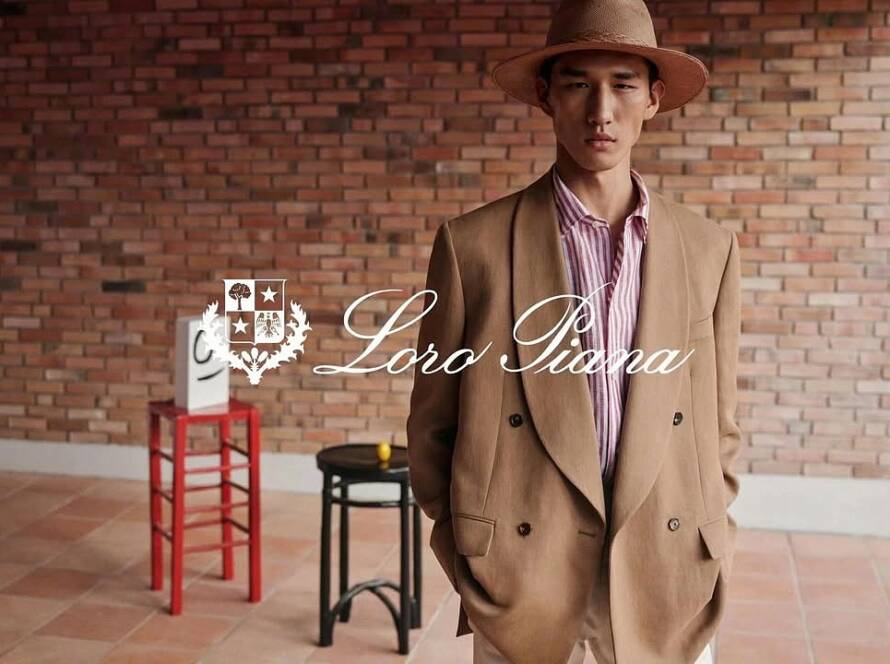
Picture the scene. The Carrousel du Louvre, a Thursday morning in April. Beneath the glass roof, LVMH shareholders are seated in their velvet armchairs. On the stage, not a single PowerPoint slide. Not a single bar chart. But five figures taking the floor one after another, with the choreographed precision of an Opera ballet. Delphine speaks about Dior. Antoine speaks about brand image and environmental responsibility. Frédéric speaks about Loro Piana. Alexandre speaks about Africa. Jean talks about watchmaking.
And then, the patriarch takes back control.
What unfolded at the Carrousel du Louvre was not a shareholder exercise. It was an act of power. And like any act of power in the luxury sector, it rests on a paradox: revealing in order to conceal. Exposing in order to better protect the mystery.
The Theater of Power
Bernard Arnault is 77 years old. In 2025, LVMH’s articles of incorporation were amended to raise the age limit for the chairman to 85. His term was renewed with 99% of the vote. His family holds 50.01% of the equity and 65.94% of the voting rights. Their control is, mathematically speaking, absolute.
So why this spectacle? Why bring five children up on stage when no one is forcing you to do so?
Because the luxury industry, more than any other, understands that power is not passed down through corporate bylaws. It is passed down through narratives. What Bernard Arnault did on April 23 was not to introduce his successors. It was to create the image of a succession. A crucial distinction. The image reassures the markets without committing to the future. It says, “Look, everything is ready,” while whispering, “but nothing has been decided.”
Do they seem very ambitious? I don’t know… You tell me.
This statement is no joke. It is a masterpiece of communication. By passing the question on to the shareholders, Arnault turns the meeting into a mirror. It is no longer he who is putting his children on display. It is the shareholders who are evaluating them. The patriarch becomes a spectator of his own succession. An unassailable position.
80 billion and vertigo
Behind the dynastic spectacle, the numbers tell a different story. Revenue of €80.8 billion in 2025, down 5%. Operating profit down 9%. Net profit down 13%. Operating margin squeezed from 23.1% to 22%. For the first time since the pandemic, LVMH is down.
In any other industry, these figures would be enviable. But luxury isn’t measured against the rest of the world. Luxury is measured against itself. And when your name is LVMH, a 5% decline isn’t just a correction. It’s a warning sign.
A sign of a world in turmoil. The Middle East, which accounts for 6% of sales, cost the company one percentage point of organic growth in the first quarter of 2026. Sales at malls in the Gulf region plummeted by 30% to 50% in March. And Bernard Arnault uttered the words everyone had been dreading.
« Either it will be a global catastrophe with extremely severe economic consequences, or it will be resolved more quickly. »
Two scenarios. No certainties. In between, the luxury sector does what it does best: it moves forward quietly.
Africa, the continent that didn't exist
The surprise of this meeting has a name: Alexandre. The third son, CEO of Moët Hennessy, devoted his remarks to the group’s strategy for Africa. The continent had never been mentioned at an LVMH shareholders’ meeting before. Now it has been.
This is no small matter. When a group whose revenue relies on Europe, the United States, China, and Japan begins to look toward Africa, it says something about the limits of its traditional markets. It also says something about its long-term vision. Africa is not a luxury market in 2026. But it could be by 2040. And luxury empires, unlike political empires, think in terms of generations.
Perhaps this is where the dynastic narrative really comes into its own. It is not Alexander who speaks of Africa. It is the next generation that speaks of the world to come.
Tiffany and the Jewelry War
The other major announcement at the meeting went almost unnoticed amid the flurry of succession news. Bernard Arnault reaffirmed his goal of making Tiffany the world’s leading jewelry brand—within five years.
The ambition is colossal. Tiffany, acquired in 2021 for $16 billion, was then little more than an American sleeping beauty. Four years later, the jewelry division is posting 7% organic growth within LVMH, with double-digit growth in fine jewelry. The group’s crown jewel is no longer a handbag. It’s a diamond.
This shift says something profound about the evolution of luxury. Leather goods drove growth for twenty years. But leather goods can be copied, imitated, and reproduced. A diamond cannot. A gemstone possesses a rarity that even LVMH cannot manufacture. And in a world where artificial intelligence can reproduce any design, natural rarity becomes the last bastion of true luxury.
What Arnault's silence tells us
Ultimately, this general meeting was built on silence—Bernard Arnault’s silence in the face of the only question that matters: who?
You’ve re-elected me by a 99% margin for the next ten years. So, we’ll talk about all this again in seven or eight years, if that’s okay with you.
Seven or eight years. That’s the timeframe he’s given himself. It’s also the time the five heirs have to prove themselves, to fail, and to stand out. Seven or eight years during which the global luxury industry will be led by a man who transformed a textile empire into the largest constellation of brands humanity has ever known.
LVMH’s annual general meeting is never just a financial event. It is a barometer of civilization. The 2026 meeting tells us this: the world is uncertain, luxury is resilient, and power, in its purest form, is not to be shared. It is to be displayed.
Bernard Arnault left the Carrousel du Louvre through a side exit, as always. No cameras. No statements. Silence, once again. The silence of a strategist who knows that the best answer to an impossible question is not to ask it.