Why Loro Piana, The Row, and Bottega Veneta are communicating less and less, and how this calculated silence has become the new luxury.
There was a time when the power of a luxury brand was measured by the volume of its voice. Spectacular campaigns, global ambassadors, fashion shows broadcast live across every continent. Then something shifted. The most coveted brands have become the quietest. This paradox isn’t really a paradox: it’s a strategy. And it’s redefining the rules of communication in the luxury sector.
The Age of Noise and Its Decline
For two decades, the luxury industry adopted the tactics of the mass market. Frequent social media posts, a proliferation of collaborations, and an explosion of video content. The goal was clear: to stay relevant in the constant stream of information and capture attention in a world saturated with stimuli. Luxury houses invested heavily in their digital departments. Some posted up to three times a day on Instagram. Luxury spoke loudly, everywhere, all the time.
But this strategy had an unintended consequence. By trying to be everywhere, luxury diluted its very essence: scarcity. When a brand posts as frequently as a fast-fashion retailer, what remains of its aura? When a bag is seen a thousand times a day in a feed, where does desire still lie?
It is precisely into this gap that the houses of silence have rushed
Loro Piana: The luxury of not having to prove anything
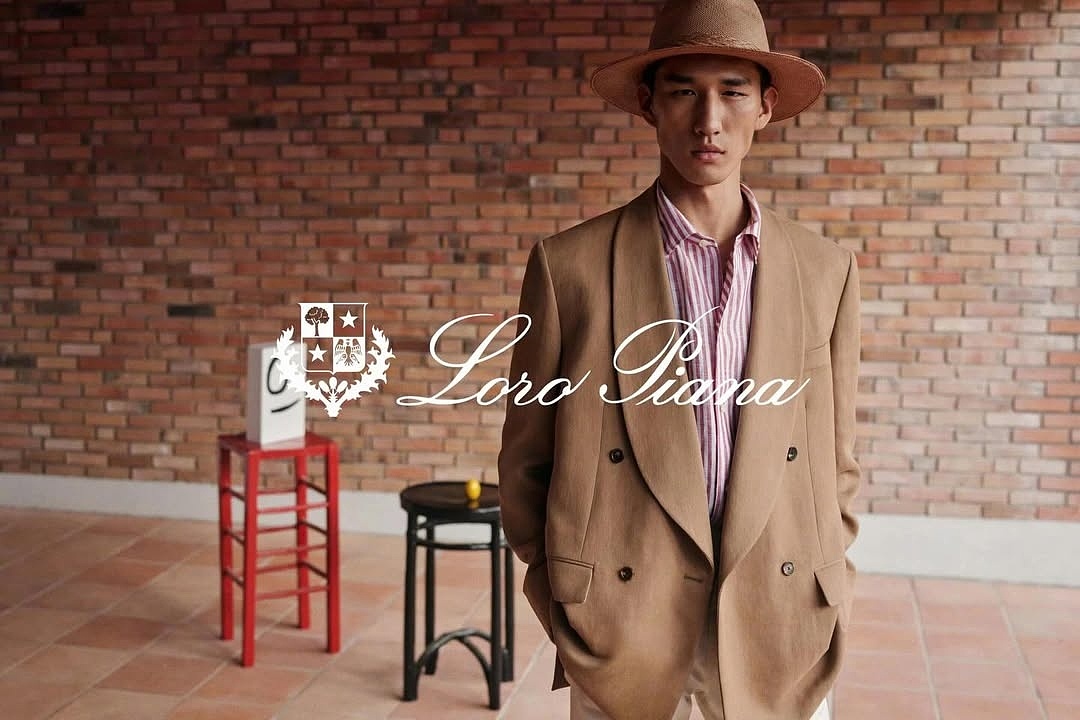
Loro Piana is perhaps the most striking example of this philosophy. No flashy advertising campaigns. No brand ambassadors in the traditional sense. An Instagram account of almost ascetic simplicity: fabrics, landscapes, artisanal techniques. Never any excessive staging. Never chasing trends.
The Italian house, owned by the LVMH group since 2013, has built its positioning on a conviction: the customer who buys an €8,000 baby cashmere coat doesn’t need to be shouted at. He already knows. He recognizes. He belongs to a circle defined not by ostentation but by knowledge.
True luxury doesn’t make a big show of itself. It is recognized among those in the know, like an accent that only those who speak the same language can pick up on.
This positioning is no accident. It is a sophisticated branding strategy based on a simple premise: the less you say, the more people listen. And the results prove this approach right. Loro Piana has been posting double-digit growth for several years, driven by an extremely loyal customer base and a brand appeal that transcends trends.
The Row: Anti-Spectacle as Manifesto
Founded by Mary-Kate and Ashley Olsen in 2006, The Row has taken this approach even further. The two sisters, once a constant presence in the tabloids, have methodically withdrawn from the public eye. They almost never give interviews. The brand’s fashion shows are held in intimate, invitation-only venues. The website is utterly minimalist. No prices listed. No excessive storytelling. Just the product.
This strategy of withdrawal has had a magnetic effect. The Row has become the brand most cited by fashion insiders, the silent benchmark that everyone watches. Its influence is measured not in impressions or engagement rates, but in mentions in private conversations, in waiting lists for its iconic pieces, in requests for appointments at its exclusive boutiques.
The message is crystal clear: in a world that screams, the one who whispers commands all the attention.
Bottega Veneta: Step Back to Take the Lead
The Bottega Veneta case is perhaps the most dramatic, because it was the most sudden. In January 2021, under the creative direction of Daniel Lee, the brand deleted all its social media accounts. Overnight. Instagram, Facebook, Twitter: everything was wiped clean. In an industry where social media is considered vital, it was a radical break with convention.
The brand replaced its social media presence with a quarterly digital magazine, Issued by Bottega, curated by artists and photographers. An editorial piece rather than a feed. A publication rather than a notification. The choice of format said it all: we are not part of the constant conversation. We create pieces that deserve a moment’s pause.
Since then, Bottega Veneta has returned to social media, but with drastically reduced frequency and a radically different tone. The hiatus of silence redefined the perception of the brand. It proved that a luxury house could not only survive without social media, but emerge stronger, more desirable, and freer.
The Reverse Attention Economy
What these three brands have realized amounts to a fundamental shift. In the traditional attention economy, value goes to whoever captures the most attention. In the contemporary luxury economy, value goes to whoever remains elusive. Scarcity no longer applies solely to the product; it applies to the brand’s very voice.
This phenomenon is part of a broader context. Luxury consumers, particularly UHNWIs (Ultra High Net Worth Individuals), are expressing growing fatigue with digital noise. They no longer seek information—they are saturated with it. They seek silence. Space. Time. Luxury, at its core, has never been anything other than this: time and space devoted to the things that matter.
Scarcity is no longer just about the product. It’s about the brand’s message itself. The less you say, the more weight each word carries.
Silence as an artistic direction
It would be simplistic to reduce this trend to a mere communication strategy. Silence, in these fashion houses, permeates the entire artistic direction. It is found in the boutiques—minimalist, almost empty spaces where every piece breathes. It is found in the runway shows—no deafening music, no pyrotechnic staging, just bodies walking and clothes that speak for themselves. It is found in the packaging—understated, tactile, without ostentatious logos.
Silence has become a visual language as much as a verbal one. It says: we have nothing to prove. It says: our value does not depend on your validation. It says: if you have to ask, it’s not for you, and this exclusion is not aggressive; it is simply the natural consequence of a confident positioning.
What this means for the brands of tomorrow
For emerging fashion houses and creative directors observing this trend, the temptation might be to copy the formula: post less, talk less, show less. But that would be a mistake. Silence only works if it is meaningful. Loro Piana can afford to be silent because its cashmere has been speaking for a century. The Row can afford to step back because the quality of its tailoring has become legendary. Bottega Veneta can disappear from social media because its intrecciato is instantly recognizable.
Silence is not a strategy for the weak. It is the privilege of those who have built indisputable excellence. It requires, first and foremost, a massive investment in the product, in craftsmanship, in consistency. It demands absolute confidence in the ability of the work to speak for itself.
For brands that aren’t there yet, the lesson lies elsewhere. It lies in intention. Every statement must be weighed, every image must be necessary, every campaign must offer something that silence alone could not convey. The question is no longer “how can we be seen?” but “what do we have to say that merits breaking the silence?”
Conclusion: The Power of Withdrawal
Silence as a brand language is not a passing fad. It is a structural response to information overload. It is the translation, in the realm of communication, of a truth that the luxury sector has always upheld: true value needs no justification.
Loro Piana, The Row, and Bottega Veneta are not silent by default. They are silent by choice. And in a world that confuses visibility with value, this choice is perhaps the most powerful act of communication there is.
This article marks the launch of the “Regard” section in Yvorine Magazine, a space dedicated to analyzing and deciphering the creative strategies and artistic directions that are redefining the luxury industry.