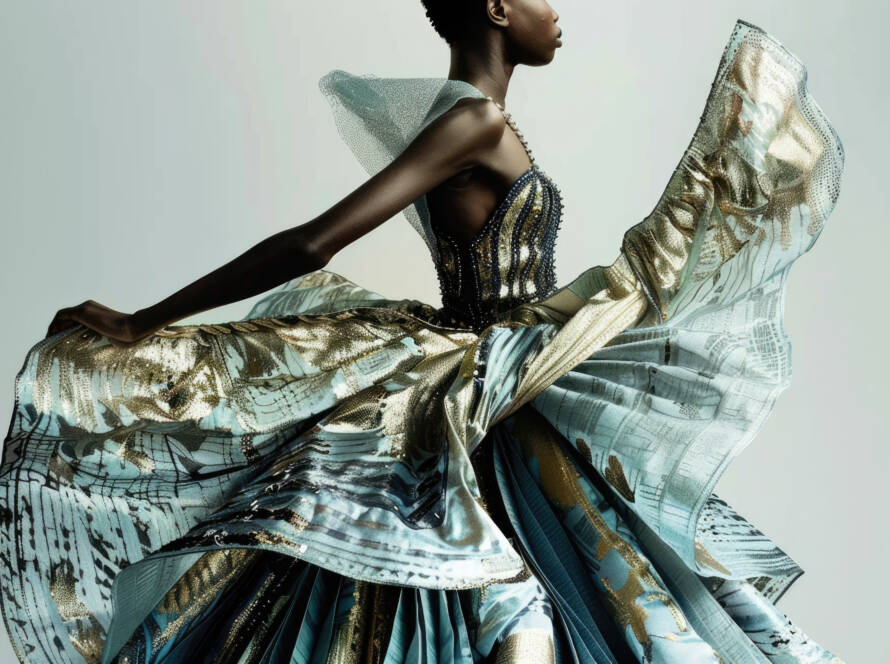
Why Cannes has replaced the Met Gala in the symbolic economy of luxury, and what this shift reveals. A reading of a philosophical mutation that has unfolded in silence for ten years, and which reaches its culmination this May 2026.
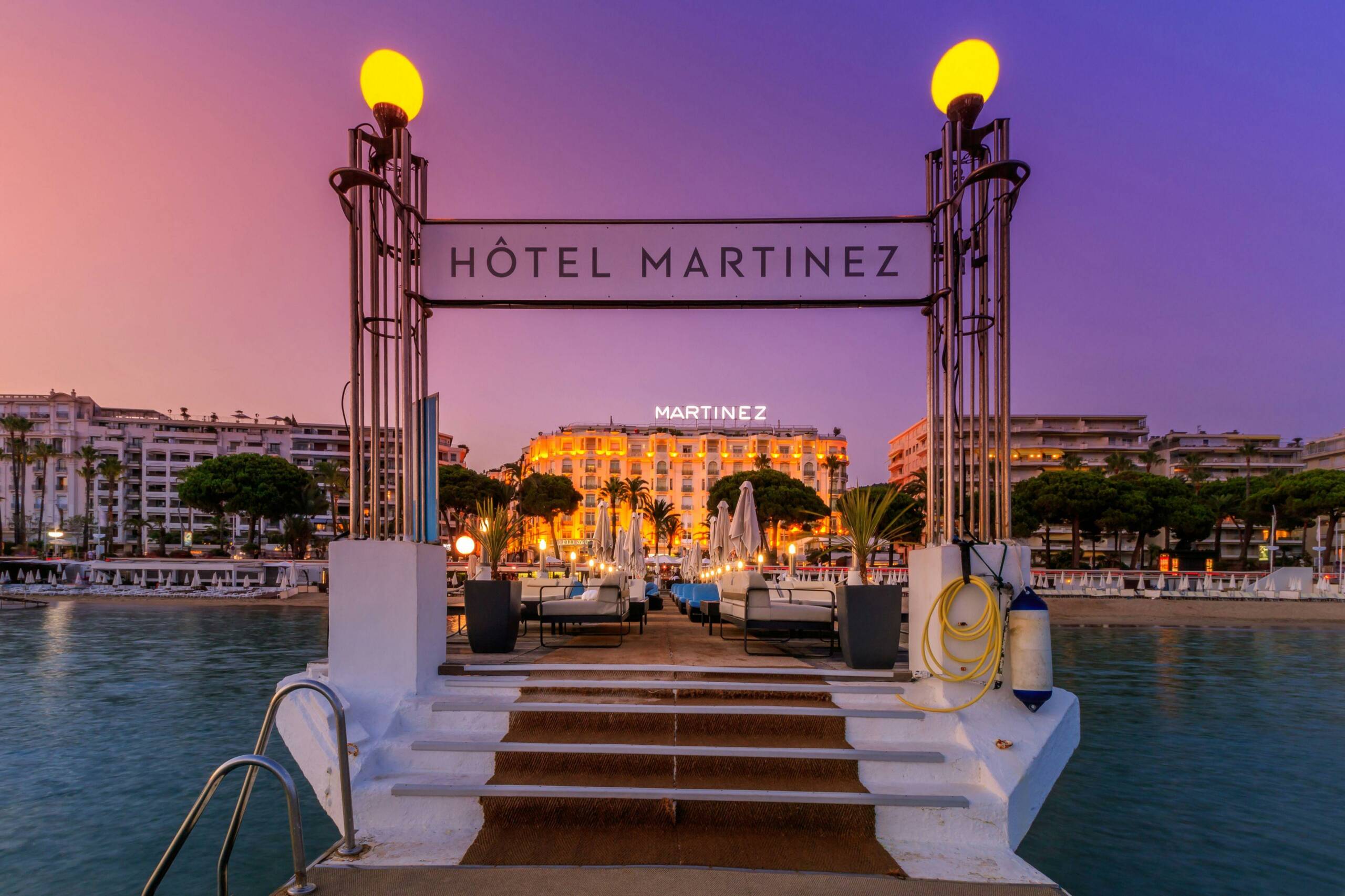
Picture the scene. The eleventh of May 2026, late Monday afternoon. The Croisette is still quiet. The white barriers have been laid along the Boulevard. At the Palais des Festivals, technicians check the lighting of the podium. At the Hôtel Martinez, bellhops align suitcases that no one has yet claimed. At the Carlton, Chopard’s marketing director inspects the room where, in twelve hours, the Palme d’Or will be presented.
Tomorrow, the Cannes Film Festival opens. And what is at stake there is no longer a film festival.
For ten years, slowly, almost without anyone formulating it, the most strategic event of the global luxury calendar has shifted. It is no longer held at the Met in New York on the first Monday of May. It takes place in Cannes, on the French Riviera, over twelve days in the middle of the month. The shift was not announced. It imposed itself. And it says, about the state of contemporary luxury, something deeper than any quarterly figures could reveal.
The Summit of Half a Century
Cannes is eighty years old this year. The Festival, conceived in 1939 as a response to the fascist takeover of the Mostra of Venice, was delayed by the war. It was first held in September 1946. It is, in the language of cultural institutions, what one calls an established fact. It belongs to the landscape, no one questions its existence anymore, one simply observes what it becomes.
The relationship between Cannes and luxury is old, but its nature has changed. In the 1950s and 1960s, couture houses dressed actresses the way they would have dressed any woman of the European elite. Dior for Olivia de Havilland, Givenchy for Audrey Hepburn. It was an indirect presence, passing through the bodies of stars without revealing itself.
The turning point came in 1998. That year, Chopard became the official partner of the Festival. Caroline Scheufele, co president of the house, designed a new version of the Palme d’Or. Twenty four carat yellow gold, set on a cushion of rock crystal. The gesture was calculated. The jewellery house had not merely paid to appear on communication supports. It had inscribed its signature in the most symbolically charged object of the event. From then on, whenever the prize list is announced, Chopard is also named.
No one, at the time, measured what this meant.
The following twenty five years confirmed it. Dior set up cultural exhibition spaces in Cannes in the Suquet quarter. Saint Laurent, under Anthony Vaccarello, no longer content with dressing ambassadresses, started producing its own films, signed by Pedro Almodóvar, David Cronenberg, Wong Kar wai, Jim Jarmusch. Brunello Cucinelli became a partner of private gatherings. L’Oréal Paris built its year around its Cannes ambassadresses. Loewe, Boucheron, Brioni followed. The budgets invested by luxury houses in Cannes, according to consolidated estimates by the economic press, would now amount to tens of millions of euros annually, for twelve days of event.
“The Met Gala lasts one night. Cannes lasts twelve days. It is duration that makes the difference, and the signature.”
Why Cannes Has Overtaken the Met
The difference is not tactical. It is structural. Four parameters explain the shift.
First, duration. The Met Gala is a lightning event. Four hours, fifteen hundred guests, two hundred and fifty photographs retained the following morning. Saturation is total, the return is immediate. Cannes, by contrast, spreads its intensity. Twelve days, multiple successive ascents of the steps, parallel cocktails, private dinners, gala screenings. A house can deploy itself there through several coordinated gestures. The red carpet on Monday, the gallery opening on Tuesday, the intimate dinner on Thursday. Duration multiplies points of contact. It also allows breathing room, a quality the Met never offers.
Then, geography. The Met is New York based, museal, American. It belongs to a specific institutional fabric, that of Manhattan, the Costume Institute, North American philanthropy. Cannes is European, open to the Mediterranean, naturally traversed by high end clients from the Middle East and Asia. For a group like LVMH or Kering that now generates the majority of its revenue outside North America, geography matters. Cannes speaks to more markets simultaneously.
Then, format. The Met Gala is a dinner spectacle in the strict sense. A theme imposed by the Costume Institute, a choreographed dress code, an obligatory reading of the costume. Cannes demands no theatricality. An actress can wear an archival Saint Laurent, a Couture Dior, or a white shirt. The Cannes red carpet allows singularity, where the Met absorbs it into its theme. This latitude is precious for the houses. They can project their signature there without distorting it.
Finally, the nature of the institution. The Met Gala is a fundraising evening for a museum. Its primary function remains philanthropic. Cannes is a film festival, that is to say a device of cultural consecration whose legitimacy is built independently of luxury. When a house associates itself with the Met, it funds a museum institution. When it associates itself with Cannes, it enters a ritual of art. The nuance is decisive.
And this is precisely where the shift unfolds.
The New Investments
Three concrete cases, chosen for their exemplarity.
Saint Laurent, under Anthony Vaccarello, has made Cannes its great annual rendezvous, more than any other event in the fashion calendar. The house does not merely dress. It produces. Strange Way of Life by Pedro Almodóvar in 2023. The short films signed by David Lynch, Jim Jarmusch, and Wong Kar wai for Saint Laurent Productions. The logic is clear. Vaccarello is not doing cinema marketing, he is doing cinematic production under the cover of a fashion house. The boundary dissolves.
Dior has made the Suquet quarter its Cannes territory. In the literal sense. The house arranges ephemeral spaces there which it transforms into exhibition galleries for the duration of the Festival. Picasso and Dior. The cinematic muses of the house. Marlene Dietrich. The exhibitions change, the gesture remains. Dior positions itself, in Cannes, as an institution capable of presenting works, not as a brand that exhibits itself.
Chopard, the oldest partner, is also the most discreet. The jewellery house does not use Cannes for image moves. It maintains a ritual presence there. The Palme d’Or signed by Caroline Scheufele, the Trophée Chopard awarded to young talents, the private gatherings held year after year in the same villa. Chopard’s strategy is one of rooting. Twenty eight years of continuous investment, without rupture, without pivot. The result, today, in the public mind, the Palme d’Or is Chopard. The house has merged with the event.
Three cases, three distinct logics. Cultural production, museum authority, rooting. But one same direction. Houses no longer content themselves with appearing at Cannes. They seek to inscribe themselves in the memory of the event. To become a constitutive part of it.
“Cannes does not celebrate fashion. It uses it as a passport to enter culture.”
What This Shift Means
Beyond particular cases, the shift from the Met Gala to Cannes reveals a philosophical paradigm change about what contemporary luxury is.
For thirty years, the dominant strategy of major houses was self celebration. Luxury presented itself as the highest point of fashion culture. The shows, the campaigns, the Met Galas were the rituals of this self celebration. Fashion talked about fashion, and luxury legitimised itself through fashion.
This model has aged. Three factors progressively exhausted it. The saturation of shows, six seasons per year instead of two, an acceleration that has banalised the event. The loss of centrality of fashion magazines, which no longer hold the power of consecration they did twenty years ago. And the blurring of the boundary between fashion and fast fashion, which forced houses to distinguish themselves elsewhere than on the fashion terrain.
Cannes offers exactly this elsewhere. By associating itself with cinema, luxury accesses a legitimacy it can no longer produce on its own. Cinema, art in the institutional sense of the term, confers upon the house that approaches it a cultural dignity that fashion, having become consumable, can no longer deliver. This is a transfer of legitimisation by contiguity.
The movement is not specific to luxury. All industries whose prescriptive power has eroded seek to legitimise themselves by associating with symbolically superior fields. But in luxury, the gesture takes on a particular intensity, because luxury defines itself precisely by its capacity to embody something other than a product. When this capacity exhausts itself on the fashion terrain, it reinvents itself on the art terrain.
The shift from the Met Gala to Cannes is therefore not a question of marketing tactics. It is the silent admission of a deeper mutation. Luxury no longer believes itself capable of legitimising itself on its own terms.
“When luxury chooses cinema rather than fashion to be seen, it says something about what it thinks of itself.”
Tomorrow morning, in Cannes, the red carpet will be rolled out. The first actresses of the Festival will ascend the steps. The photographers will capture their gowns, their necklaces, their watches. The fashion press will broadcast live from the Hôtel Martinez. And no one, watching these images, will quite say what is at stake.
Cannes does not celebrate luxury. Luxury comes to Cannes so as no longer to have to celebrate itself.
It is an admission disguised as a triumph. And it traces, in silence, the luxury that is to come.