Luxury no longer sells objects alone: it serves moments. But between opening a hotel and serving a coffee, not every house crosses the same threshold. A reading of a frontier that the fashion for the experiential prefers to ignore.
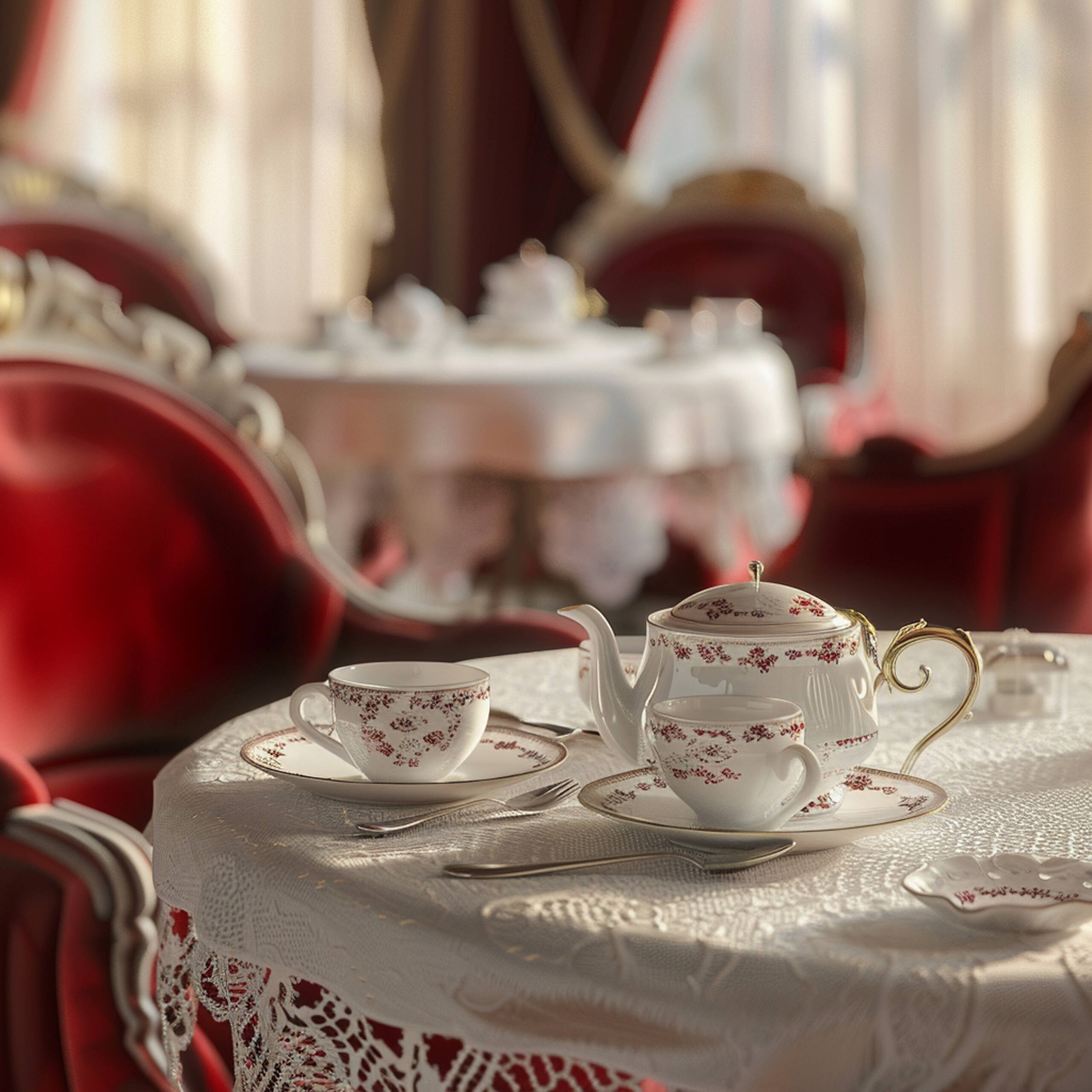
In Saint-Tropez, one summer, people queue for a coffee. Not at a roaster’s counter nor in a century-old brasserie, but at the table of a leather-goods house. The service is careful, the tableware designed, the monogram discreet on the cup. One comes to sit there as one would walk into a boutique, except that one buys nothing other than a moment. The house no longer sells only an object. It serves a moment.
The movement is anything but anecdotal. LVMH now operates Cheval Blanc, Belmond and the Bulgari hotels, and makes hospitality a craft in its own right. Louis Vuitton, however, has just given up its hotel on the Champs-Élysées, announced and then abandoned in early 2026, while multiplying cafes and tables, from Osaka to Ginza to Saint-Tropez. On one side the house turns hotelier. On the other it refuses to. The same group chooses two different thresholds, and that choice says almost everything.
We think a house grows larger by opening a hotel. Some deepen by serving a coffee.
The age has made experience the new promise of luxury. Eighty-one percent of clients say they prefer a personalised moment to one more product. The trade has drawn from this a rule no longer up for debate: one should offer a stay, a table, a place in which to live the brand rather than wear it. The logic seems unanswerable. Yet it masks a question few houses ask themselves. How far can a signature be stretched before it ceases to signify.
For there are two ways of entering experience, and they do not commit the house to the same thing. To open a hotel is to learn another craft: the night, the staff, the real estate, the running of a place that never sleeps. To serve a coffee is to stay on one’s own ground and prolong a gesture one already masters. The first threshold diversifies. The second deepens. To confuse them is to believe that every extension is worth the same.
The hotel is a powerful temptation, for it promises to envelop the client entire. But it commits the house to ground where its name no longer suffices. A badly cut bag is seen; a failed service is told and written online for years. The house that becomes a hotelier hands its reputation to crafts it does not know, and discovers that hospitality forgives no approximation. Several try. Not all survive.
The cafe, the table, the tearoom obey another economy. They do not take the house away from its craft: they translate its grammar into another register. The same attention to detail, the same sense of material, the same restraint are found in a cup as in a seam. The client does not change worlds, he experiences a new slope of the same one. To serve a coffee, for these houses, is not a diversification. It is one more sentence in the same language.
Still, this threshold too can be crossed badly. A cafe opened for footfall and photography is no longer a prolongation: it is a billboard with chairs. What sets houses apart is not the presence of a table, but the rightness of the threshold they choose. To extend one’s language is an art. To confuse it with a display stand is its failure.
The real question is not whether to serve a coffee or build a hotel. It is whether, in doing so, a house still speaks its own language.
To serve a coffee is not to leave one’s craft. It is to prolong its language.