A comparative look at three companies that have built a strong brand appeal without relying on traditional advertising.
They have no visible logo. They don’t sponsor celebrities. They don’t seek to dominate social media feeds. Yet Alaïa, Khaite, and Totême are among the most frequently mentioned brands in conversations among fashion professionals and savvy consumers. Their common weapon? A systematic approach to discretion. Three journeys, three cultures, one shared conviction: desirability is built through restraint, not through exposure.
Alaïa: The Master’s Legacy, The Rhythm of Dissent
Azzedine Alaïa always defied the system. When the fashion world sped up, he slowed down. When Fashion Week schedules dictated the pace, he presented his collections when he saw fit, sometimes months after the others. This defiance of the established timeline was no whim. It was a philosophy: clothing dictates its own schedule, not the industry.
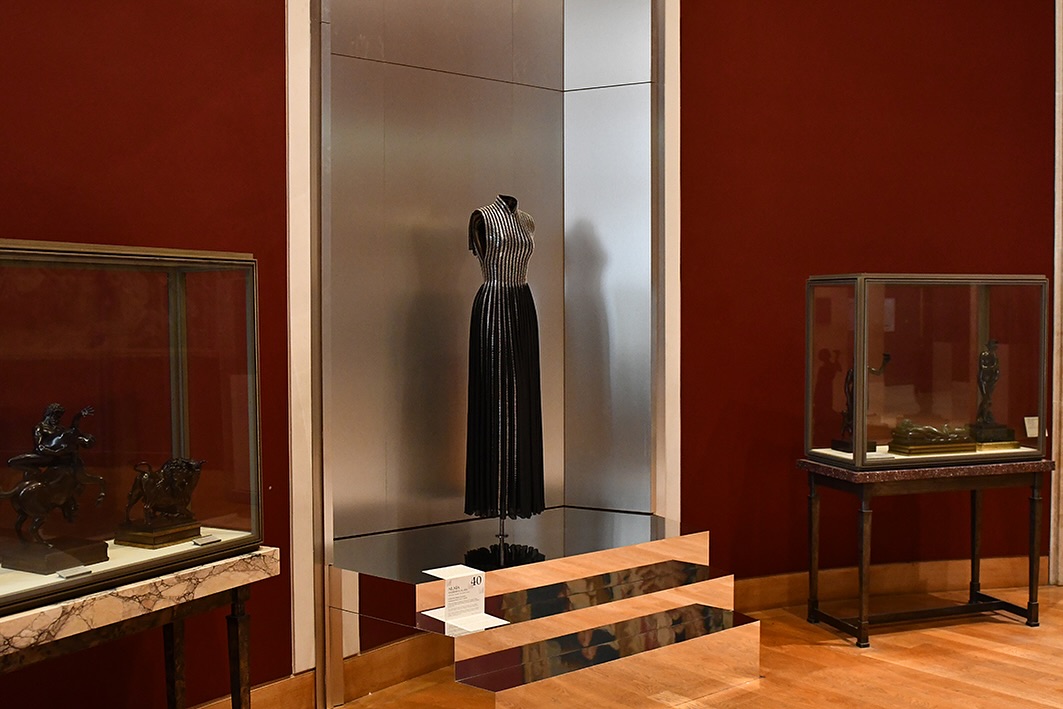
Since the founder’s passing in 2017, the house has maintained this stance under the creative direction of Pieter Mulier. Runway shows remain rare and precious. Advertising campaigns exist, but without the flashiness of the competition. The house’s Instagram account focuses on archives, workshops, and cut details—content that educates more than it seduces.
The result is striking. Alaïa has become the brand that the most discerning women turn to when they want a garment that transcends the seasons. Its knit dresses, corset belts, and ballet flats have become instant classics—not thanks to a marketing campaign, but through word of mouth among the in-the-know.
Azzedine used to say, “Fashion isn’t about the dress. It’s in the eyes of the woman wearing it.” That sentence encapsulates the brand’s entire strategy.
Alaïa’s strength lies in the almost fanatical loyalty of its clientele. Women who wear Alaïa aren’t looking to be seen. They’re looking to feel. This is a fundamental distinction, and it is precisely what makes the brand impervious to market fluctuations and the whims of algorithms.
Khaite: The Quiet Rise
Founded in 2016 in New York by Catherine Holstein, Khaite has achieved in eight years what most brands take thirty years to build: establishing itself as a benchmark in American fashion. Without magazine ads. Without a high-profile brand ambassador. Without a high-profile collaboration. Khaite’s path is one defined by the product itself—pure, obsessive, uncompromising.
Catherine Holstein comes from a merchandising background, not design in the traditional sense. She understands clothing through its use, through the body, through everyday life. Her collections tell the story of a woman who dresses not to impress but to live life to the fullest. A cashmere sweater that fits perfectly. Jeans that transform the silhouette. A trench coat with a cut so precise it needs no logo to be recognized. Khaite’s communication strategy relies almost entirely on organic reach.
The campaign images are beautiful but never flashy. The tone on social media is measured, almost austere. No daily stories, no viral content, no collaborations with mass influencers. The brand prefers a select circle of women who wear it naturally—architects, gallery owners, producers—rather than an army of paid influencers.
This approach has led to a remarkable phenomenon: Khaite pieces are reselling for more than retail price on secondhand platforms. The most reliable indicator of a brand’s desirability isn’t the number of followers it has. It’s people’s willingness to pay more than the asking price to own it.
Totême: Scandinavian minimalism as a manifesto
If Alaïa embodies Parisian nonconformity and Khaite represents the New York rise, Totême embodies Scandinavian minimalism taken to its most refined expression. Founded in Stockholm in 2014 by Elin Kling and Karl Lindman, the brand was built on a radical principle: to produce only clothing that can be worn for ten years.
This promise, seemingly simple, is in fact subversive in an industry that thrives on planned obsolescence. Totême doesn’t follow trends. It doesn’t create “statement” pieces. It makes coats, pants, shirts, and knits whose quality and cut are so masterfully executed that they become the foundation of a sustainable wardrobe.
Totême’s communication reflects its clothing: functional, elegant, and minimalist. The campaigns are photographed in natural settings—a Swedish beach in winter, a modernist apartment in Copenhagen, a ceramics studio in Tokyo. Never artificial staging. Never excessive retouching. The clothing is shown as it is, in real-life settings, on women who seem to be wearing it for themselves and not for the camera.
Totême isn’t selling a fantasy. It’s selling an enhanced reality. And that is precisely why its customers keep coming back, season after season, with the same loyalty one shows a trusted doctor.
Totême’s commercial success is all the more impressive given that it was built without massive fundraising, without capital injections from conglomerates, and without the marketing resources of a luxury group. The brand has remained independent, staying true to its own pace, and turning down several acquisition offers. This independence has itself become a selling point: in an industry dominated by conglomerates, Totême proves that you can succeed by staying true to yourself.
What these three companies have in common
Beyond their cultural and aesthetic differences, Alaïa, Khaite, and Totême share several strategic principles worth highlighting.
The first is the absolute primacy of the product. At these three brands, the budget allocated to product development, materials, and manufacturing is proportionally much higher than that allocated to marketing. Investment goes into what the customer touches, wears, and experiences, not into what they see on a screen.
The second is the rejection of over-distribution. None of these three brands is available everywhere. Retail locations are carefully selected. Their e-commerce presence is tightly controlled. This scarcity of access fuels desirability: we only truly desire what we cannot easily obtain.
The third is temporal consistency. These brands do not change direction every season. They evolve slowly, through accumulation and refinement. Each collection is an iteration of the previous one, not a break. This consistency builds trust—and trust is the most valuable currency in luxury
Discretion as the ultimate luxury
What Alaïa, Khaite, and Totême teach us goes beyond mere communication strategy. It is a redefinition of luxury itself. In a world saturated with noise, stimuli, and demands, discretion has become the ultimate luxury. Not discretion as a lack of ambition, but discretion as an act of sovereignty.
These houses are not discreet because they lack the means to make a splash. They are discreet because they have understood that noise is the opposite of desire. That omnipresence kills mystery. That true power, in luxury as in life, belongs to those who do not need to be seen to exist.
This article is part of the “Territoire” section of Yvorine Magazine, which features profiles of fashion houses and interviews with luxury industry leaders.