An in-depth look at the most closely watched artistic transition of the decade. What does this lineup tell us about the state of luxury in 2025?
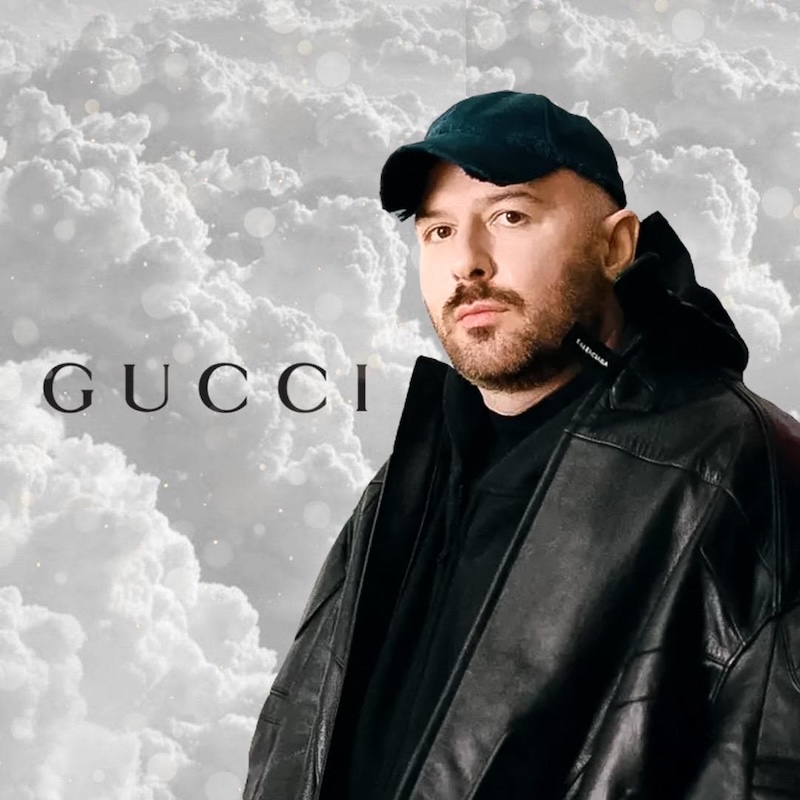
When Kering announced the appointment of Demna Gvasalia as creative director of Gucci, the fashion world held its breath. The architect of Balenciaga’s post-Soviet aesthetic, the provocateur who sent models down the runway in trash bags, was about to take the reins of the most iconic Florentine house of Italian luxury. The shock was not merely stylistic. It was cultural, strategic, philosophical. And it tells us something profound about the state of luxury today.
Gucci After Alessandro Michele: A Creative Void
To understand Demna’s appointment, one must first understand the void it fills. For eight years, from 2015 to 2023, Alessandro Michele transformed Gucci into a cultural phenomenon. His exuberant maximalism—a mix of patterns, encyclopedic references, and gender-fluid aesthetics—made the house the emblem of an era. Gucci under Michele was fashion as total spectacle, as a statement of identity, as a never-ending party.
But all good things must come to an end. Weariness gradually set in. Sales began to decline. The public, saturated with maximalism, began a shift toward simplicity. Michele’s departure in November 2022 left a huge void—not just a creative void, but an identity void. Who was Gucci without Michele? What was the essence of the house, beyond the baroque filter of its former creative director?
Sabato De Sarno, appointed as his replacement, attempted a measured response: refined, elegant collections that sought to recapture the classic Gucci. The intention was commendable. The result, both commercially and critically, fell short of expectations. The press described his collections as “pretty but forgettable.” Sales did not rebound. Gucci needed a jolt. Demna is that jolt.
Demna: Portrait of a Methodical Disruptor
To reduce Demna Gvasalia to the role of a provocateur would be a fundamental mistake. True, he has built his reputation on controversial moves: “destroyed” sneakers priced at $1,850, bags inspired by Ikea trash bags, and runway shows set in mud or artificial snow. But behind every provocation lies a rigorous philosophy about clothing, consumer society, and the very function of fashion.
Demna is a product of the deconstruction school, the intellectual heir to Martin Margiela and Rei Kawakubo. His training at the Royal Academy of Fine Arts in Antwerp equipped him with a technical rigor that belies the seemingly careless appearance of his designs. His “oversized” garments are cut with surgical precision. Their “distorted” proportions are the result of complex geometric calculations. The apparent disorder is a higher order.
Demna doesn’t design ugly clothes. He designs clothes that challenge our definition of beauty. It’s a distinction that the luxury market—obsessed with instant appeal—struggles to understand.
At Balenciaga, he achieved something remarkable: he made social commentary desirable. His collections addressed migration, precariousness, and overconsumption—and they sold well. He proved that fashion could be both intellectually challenging and commercially viable. It was this rare ability that convinced Kering to entrust him with Gucci.
Gucci × Demna: The Stakes of a Clash
The clash between Gucci’s DNA and Demna’s world is fascinating because it pits two seemingly irreconcilable visions of luxury against one another. Gucci embodies Italian sensuality, glamour, la dolce vita, ostentatious logos, and cheerful color-blocking. Demna embodies post-Soviet austerity, deconstruction, social commentary, and a self-proclaimed anti-glamour.
Yet, upon closer inspection, points of convergence do exist. Tom Ford, who revitalized Gucci in the 1990s, did so with a massive dose of sexual provocation and subversion. The house has always had an ambiguous relationship with transgression; the double G has never been a symbol of discretion. Demna, in a way, is reviving this transgressive tradition, but by other means.
The central challenge is one of translation. Demna will have to “speak Gucci” without abandoning his own language. It is an exercise that very few creative directors succeed at. John Galliano succeeded at Dior by translating his British theatricality into the vocabulary of Parisian haute couture. Hedi Slimane failed at Céline by imposing his aesthetic without regard for Phoebe Philo’s legacy. The line between reinvention and betrayal is a fine one.
What this appointment says about the state of the luxury industry
Beyond the Gucci case, Demna’s appointment is a telling sign of the state of the industry in 2025. It tells us several things.
First, that playing it safe no longer pays off. The De Sarno interlude showed that a cautious, consensus-driven, “harmless” luxury is no longer enough to generate desirability in a shrinking market. Luxury consumers, even those who have shifted toward simplicity, want vision. Perspective. Tension. Not lukewarmness.
Second, culture has taken precedence over commerce. Ten years ago, creative directors were appointed for their ability to sell bags. Today, they are appointed for their ability to generate discourse, conversation, and cultural relevance. Demna is perhaps the most talked-about designer of his generation, for better or for worse. And in the attention economy, discussion is a more valuable currency than approval.
Third, the boundaries between fashion houses are becoming porous. Twenty years ago, imagining Balenciaga’s creative director at Gucci would have been absurd—their DNA was too different. But contemporary luxury increasingly functions like contemporary art: it is the artist’s vision that takes precedence over the institution’s identity. The house becomes a medium, a canvas. The designer is the author.
We have entered an era in which the creative director acts as an author. The fashion house is no longer an immutable institution. It is a language that each new designer learns, twists, and reinvents.
Risks: Between Ingenuity and Failure
The appointment carries significant risks, and it would be naive to ignore them. The first is commercial. Gucci’s customer base, particularly in Asia, which accounts for a massive share of revenue, is not necessarily ready for Demna’s aesthetic. Chinese and Korean consumers who buy Gucci are often looking for a bold, joyful, recognizable luxury. Demna’s anti-glamour could throw them off balance.
The second risk concerns identity. If Demna imposes his visual vocabulary too forcefully, Gucci could become a “second-rate Balenciaga.” The house would then lose what makes it unique: its Italian spirit, its sensuality, and its connection to pleasure. Striking a balance between the designer’s personality and the house’s DNA will be the most delicate challenge.
The third risk is contextual. Demna is joining Gucci amid a challenging market environment. The luxury sector is undergoing a correction phase following years of hypergrowth post-COVID. Kering’s expectations are immense; Gucci must once again become the group’s driving force. Commercial pressure could constrain the creative freedom that Demna has always championed.
What we expect and what we hope for
Demna’s first collection for Gucci will be one of the most closely watched events of the year. Every choice will be scrutinized: the silhouettes, the materials, the runway staging, the marketing campaign. The fashion world is waiting for a statement, not a compromise.
What we hope for at Yvorine is that Demna does what he does best: forcing us to rethink our certainties. That his Gucci is neither a copy of his Balenciaga, nor a timid homage to Tom Ford, nor a return to Michele’s maximalism. That he invents a third path, a vision that didn’t exist before him and that cannot exist without him.
For that, ultimately, is what distinguishes a great creative director from a good designer. The good designer follows the brief. The great creative director changes the question.
This article is part of the “Regard” section of Yvorine Magazine, which is dedicated to analyzing and interpreting creative and strategic trends in the luxury industry.